
Blackjack Hands Ranked: The Best, the Worst, and Everything In Between
8 hours ago
01 Dec
Blackjack starts with only two cards, yet those opening totals decide how each round tends to play out over time. Some openings start ahead, others land in bands where house rules and basic strategy shape the edge.
Payouts on a natural 21 show how structure matters. A six-deck shoe that pays 3:2 on blackjack and uses dealer-stands-on-soft-17 (S17) can sit near a house edge of around half a percent with basic strategy.
Blackjack Hands Ranked Into Practical Bands
In real sessions at blackjack tables, the deck does not generate completely unique scenarios every hand. Blackjack hands cluster into patterns that repeat: clear winners, leverage spots, middling totals, and stiff hands that lose too often.
Treating the game as a banded model, drawn from simulation work and live hand histories, makes decisions easier than scanning every square on a full chart.
A useful ranking for US multi-deck 3:2 games looks like this:
- Premium band: natural 21 and hard 20.
- Leverage band: hard 9–11, plus soft totals with room to double or hit safely.
- Neutral band: totals such as 17–19 and soft holdings that neither dominate nor collapse.
- Trap band: stiff 12–16 against strong dealer upcards, where both hitting and standing carry clear downside.
The best blackjack hands mostly live in the premium and leverage bands. These positions win often, generate strong returns when doubles and splits are available, and keep variance manageable when rules remain favorable.
Hard Hand vs Soft Hand Blackjack and Ace Flexibility
A hard hand has no ace counted as 11, so any extra card that pushes the total above 21 busts immediately. A soft hand includes an ace that can float between 11 and 1, which lets the total adjust downward if a high card arrives and often supports one more hit or a more aggressive double without the same bust risk.
Soft 17 or 18 often hits against strong dealer upcards where hard 17 or 18 stands, since the ace can drop to 1 when a ten-value card lands. Soft 13–16 can press harder against dealer 4–6 than their hard counterparts, because that extra card may either build a stronger soft total or convert the hand into a playable hard number.
Rules that allow doubles on soft hands push these holdings even deeper into the leverage band, since extra money goes in when upside is high, and downside is capped.
Best Blackjack Hands: Naturals, 20s, and High-Value Totals
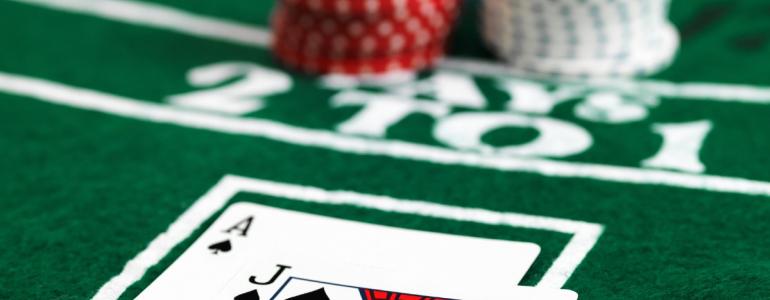
The best hand in blackjack is a natural 21. An ace with a ten-value card wins immediately against every dealer result except another 21, and in 3:2 games, each unit staked returns one and a half units when that outcome appears. Frequency sits around once every 21 initial deals, so over long samples this outcome does noticeable work against the house edge.
Hard 20 sits just behind a natural; two-card 20s such as 10–Q or K–J rarely improve with another hit, since drawing exactly an ace is unlikely compared with the bust risk. Against weak dealer upcards like 4, 5, or 6, standing with 20 yields very high win rates and very few losses.
Leverage holdings make up the rest of the best hands in blackjack. Hard 11 against a dealer 6 rates as one of the most valuable drawing positions, since a double can turn many next cards into strong totals while the dealer still carries a solid chance to break. Hard 10 against dealer 9 or lower lives in the same neighborhood.
Soft 18 against dealer 3–6 in rule sets that permit doubles on soft hands also fits; these spots shift extra money into situations where upside outpaces downside by a clear margin.
Worst Blackjack Hands and Trap Totals
At the opposite end sit the trap positions. Stiff totals between 12 and 16, especially without an ace, land in a band where hitting risks a bust and standing invites the dealer to roll over the top too often. Over long sequences, these totals account for a large share of losses, since low and medium cards combine to form them far more often than naturals or high made hands.
In live blackjack games that use 6:5 payouts and H17, regular session logs often show hard 16 versus dealer 10 surfacing several times per shoe and steadily dragging results down. The same sequence of starting cards in a 3:2 S17 online shoe with late surrender hurts far less because key traps can be folded for half the stake.
Hard 16 against dealer 10 stands out as the classic candidate when people ask what is the worst hand in blackjack. Hitting often produces a bust, standing leaves the player behind a dealer total that wins or pushes at high rates, and surrendering when available only trims the loss instead of turning the spot into a winner.
Hard 15 against dealer 10 follows a similar pattern, although late surrender improves results where rules allow it. Hard 12 versus dealer 2 or 3 looks safer on the surface, yet standing too often still leaks money over time; strategy tables usually accept the one-third bust risk on a hit rather than locking in a weak standing line.
These holdings never climb into the premium or leverage bands. At best, they shift from “very bad” to “less bad” when surrender or favorable rules enter the picture.
Blackjack Winning Hands in Numbers
Expected value, or EV, captures the average gain or loss on a hand over millions of simulated and recorded rounds.
In a standard six-deck shoe where naturals pay 3:2, the dealer stands on soft 17, and doubles are allowed on any first two cards; certain patterns repeat often enough that rough snapshots are useful.
Hand Scenario | Player Total / Situation | Dealer Upcard | Recommended Move | Win % | Push % | Lose % |
Hard 11 vs 6 | 11 (5–6) | 6 | Double down | ~64 | ~8 | ~28 |
Hard 20 vs 6 | 20 (10–Q, etc.) | 6 | Stand | ~85 | ~5 | ~10 |
Soft 18 vs 6 | A–7 | 6 | Double if allowed, else stand | ~63 | ~9 | ~28 |
Hard 10 vs 9 | 10 (6–4) | 9 | Double down | ~55 | ~5 | ~40 |
Hard 9 vs 3 | 9 (4–5) | 3 | Double down | ~55 | ~6 | ~39 |
Soft 13 vs 5 | A–2 | 5 | Hit | ~43 | ~13 | ~44 |
NOTE: Numbers are rounded orientation figures based on a six-deck 3:2 S17 template that matches the Nevada Gaming Control Board live blackjack rules as of June 2025.
Blackjack Pairs, Splits, and Shape-Shifting Hands
Pairs change character because the same two cards can stay together or split into two blackjack hands. A pair can act as a strong made total, a stiff trap, or a leverage holding depending on the dealer upcard and the rules on splitting and doubling.
A few positions illustrate how much that identity can move:
- 8–8 starts life as hard 16, solidly in the trap band. Splitting against dealer 5 or 6 turns one bad holding into two drawing hands that often outperform a single stiff 16, especially when resplits and doubles after split are allowed.
- A–A functions as a top-tier starter once splits and one-card draws enter the picture. Each ace has a strong chance to form a soft 18 through 21, so keeping them together as soft 12 usually wastes potential.
- 10–10 showcases a pair that almost never splits. Hard 20 already lives in the premium band, and breaking it apart trades one very strong outcome for two more volatile hands with lower average return.
- Small and medium pairs such as 2–2, 3–3, 6–6, 7–7, and 9–9 move between neutral and leverage bands depending on the dealer upcard and double-after-split rules. Supportive rules lift their long-run value, while strict tables pull them closer to break-even.
From Strong to Weak: Dealer Upcards and Hand Strength
Ranking hands in isolation only solves part of the puzzle. The dealer upcard reshuffles those rankings on every round, turning favorites into underdogs and pushing some middling holdings into the leverage band.
Hard 20 shows this clearly. Against a dealer 6, that total wins or pushes in a large majority of rounds, with very few losses, the dealer often breaks or finishes with a weaker result. Against a dealer 10, the same 20 still belongs among the best blackjack hands, yet push and loss rates climb enough to narrow the edge, and the total shifts from dominant favorite to a solid but less comfortable position.
Soft holdings swing even more sharply. A–7, counted as soft 18, plays strongly against dealer 3–6, where strategy often calls for doubling or standing. Against dealer 9, 10, or ace, that same hand usually moves into hit mode, since standing leaves too many losing outcomes, and the ace can drop from 11 to 1 after a high card.
Middle totals such as hard 13 or 14 move the same way; against dealer 4–6, they lean on dealer bust rates and often stand, while against dealer 9 or 10, they fall back into the trap band.
Reading Blackjack Hands With a Clear Head
Blackjack hand strength lives on a spectrum shaped by rules, deck count, and the dealer’s upcard.
The best blackjack hands cluster in premium and leverage bands, the trap band holds the practical candidates for the worst blackjack hand, and the middle ground behaves according to rule details more than card art.
Treating each holding as a small math problem and mapping it to a band keeps decisions grounded instead of reactive.
If gambling stops being fun or starts to affect daily life, US players can contact 1-800-GAMBLER for confidential support.







Comments
You need to be logged in to post a new comment